Join us
We are looking for students who take on important questions by thinking for themselves.
We aim for a fundamental understanding of brain disease and aging. In accepting students, we place weight on a solid academic foundation, the ability to reason logically, and the ability to learn new knowledge and techniques on your own.
Research experience or a finished research plan is not required. But we expect more than carrying out the procedures you are taught: understand their purpose, examine the results critically, and work out what should be investigated next. We welcome people who learn from discussion and from unexpected results, and who want to publish original research and communicate their findings internationally.
Whether your strength lies in experiments, mathematics and data analysis, or medical knowledge, you will build on it as you grow as a researcher.
For postdoctoral candidates, we would like to understand your contribution to previous research and the questions you want to pursue next.
Email: hide0729@bri.niigata-u.ac.jp.
Questions you can take forward
Neurodegeneration
Question What physiological roles do the molecules implicated in brain disease play inside the cell?
What we want to ask next How do molecules such as APP, APOE and α-synuclein (SNCA) take part in the mechanisms that protect cells? How do changes or failures in those functions lead to disease?
Aging
Question Where does aging end and disease begin?
What we want to ask next Can we stop disease without stopping aging? And why do we age at all?
Neurodevelopmental disorders
Question How do genes and environment shape brain development and behavioural traits?
What we want to ask next How does the brain contribute to social behaviour and sensory processing? How can that understanding be connected to environments and support that fit each person?
Evolution
Question What are the evolutionary origins of brain disease, developmental disorders, or aging?
What we want to ask next Why have molecules that are also involved in disease been passed down for hundreds of millions of years? How have the diversity of brain function and its vulnerabilities to disease and disability arisen through evolution?
Projects develop through discussion, starting from the lab’s research strengths and your interests and experience. We value researchers who learn from their results, refine the question and help shape the direction of their work.
How research proceeds here
Supervision and support
Experimental and analytical techniques are taught directly by faculty members, and also learned from senior students and postdocs under faculty oversight. Day-to-day progress is discussed with a supervising faculty member, and the direction of the project is discussed with Matsui at key points. The whole lab meets once a week, and each student has an individual meeting with Matsui every few months. When you are stuck, you can talk to a faculty member at any time.
Shaping a project
We develop your project together, drawing on your interests and experience and the lab’s strengths in neurodegeneration, aging and neurodevelopmental disorders, using approaches that connect cells, animal models and human brain tissue. If you already have a topic in mind, we will discuss how it could be pursued here.
Learning experiments and analysis
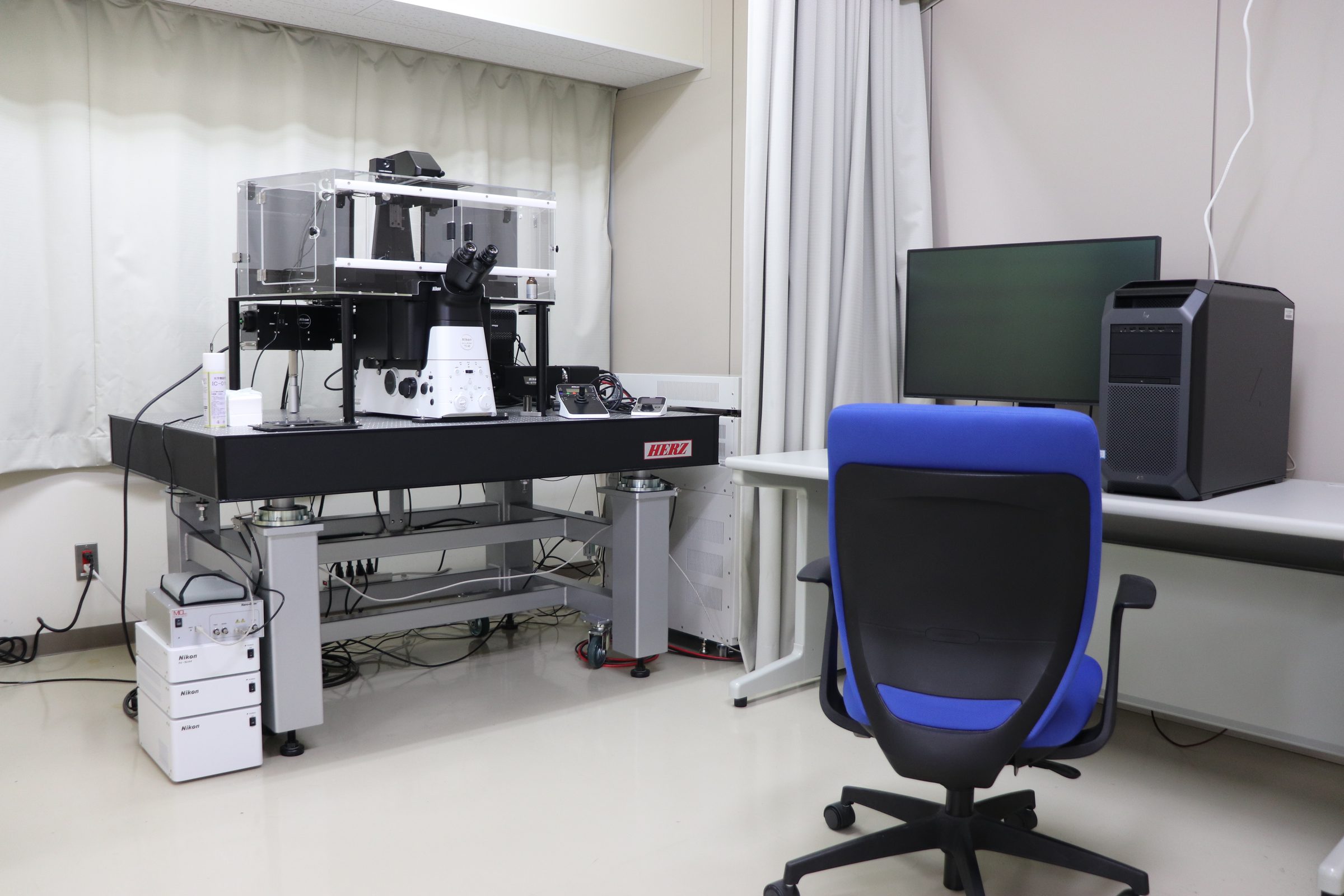
Depending on the research question, you can combine cultured cells, small fish models, mice and analyses of human postmortem brain tissue with advanced microscopy, omics, genome editing and AI-assisted analysis. Photographs of the facilities are on the laboratory page.
Discussion and development
You bring your own interpretation of the results and your plan for what comes next, and we take the discussion further together. Failed or unexpected results are material for revising the question.
Writing it up
The aim is to complete papers and connect that work to the next project or career step. We place strong emphasis on taking ownership of a project and learning to write it up as a research paper.
We value focused, productive research rather than long hours for their own sake. Working arrangements can be discussed individually when clinical duties, childcare or other responsibilities need to be balanced with the requirements of the degree or position.
Undergraduates and prospective master’s students
Tell us what phenomena interest you, what you have done in courses or practicals, what you are good at, and which question here caught your attention. Lab visits are welcome. Applicants from any undergraduate discipline are welcome.
- Science (biology, physics, etc.)9
- Medicine9
- Pharmacy2
- Veterinary medicine2
- Dentistry1
- Health sciences1
The BRI summer seminar is a way to see several laboratories. For formal admission requirements, please refer to the Graduate School of Medicine, Dentistry and Health Sciences, Niigata University (in Japanese). Graduate students may be able to use support such as tuition exemption or deferred payment, depending on eligibility. Privately financed international students can also look at JASSO grants that cover graduate students, including the Monbukagakusho Honors Scholarship. Whether a call is open, whether there is a recommendation quota, and the conditions are set out by the university office and each scheme’s guide.
Prospective doctoral students
We will discuss how your experience and interests could develop into a research project in our lab. We are not limited to medicine. Data analysis, cell biology, fish, evolution, postmortem brain, clinical samples or medical knowledge can all be starting points.
For formal admission requirements, please refer to the Graduate School of Medicine, Dentistry and Health Sciences, Niigata University (in Japanese). Funding routes include MEXT, Brain Research Institute support for eligible international students, university doctoral support, JSPS DC and self-funding. Available funding depends on the degree program, year of entry and selection outcome. Details are in the table below.
Postdoctoral candidates
The laboratory is supported by several external grants. When a salaried position is open for applications, it is announced in News and on the formal vacancy page. JSPS DC is for doctoral students, JSPS PD is for postdoctoral researchers, and the postdoctoral fellowships for researchers from overseas are separate schemes. Inquiries about joining with an external fellowship are welcome.
Visiting and short-stay inquiries
Whether a visit is possible depends on dates, home affiliation, funding and scientific fit. Visits are arranged individually. Please tell us when you would like to visit and what research interests you.
University information on living in Niigata and on the paperwork is Study at NU.
Admission, employment and funding routes
Students from Japan and from overseas are both welcome. You are welcome to contact us about research opportunities before securing a scholarship.
For applicants overseas who are considering a Japanese Government scholarship, Embassy Recommendation is a main route for applicants based overseas. University Recommendation has a general route and a special route, with different conditions and procedures. The Brain Research Institute also has its own support for international students who are eligible. Whether it can be used depends on eligibility, available funding and selection.
Scroll sideways to see the full table.
| Route | Who it is for | What to check next | Guide or contact |
|---|---|---|---|
| Graduate School of Medicine, Dentistry and Health Sciences, Niigata University | People considering master’s or doctoral study | Tell the lab the degree and entry date you have in mind, then read the graduate school’s call for that intake | Graduate school information (in Japanese) |
| MEXT scholarship (Embassy Recommendation) | Applicants overseas considering a Japanese Government scholarship. A main route | You do not need to have secured a scholarship or passed the embassy’s first screening to contact us about research. The formal application follows that year’s instructions from the embassy or consulate and from the university | Program overview |
| MEXT scholarship (University Recommendation, general) | Applicants considering the route in which the university recommends candidates to MEXT | Agreement from the lab to host you does not guarantee university nomination or a scholarship award. Conditions follow that year’s university and MEXT notices | Program guide |
| MEXT scholarship (University Recommendation, special) | Applicants overseas who want to ask about a recommendation route based on a specific program. Eligible degrees and conditions differ by program | As of 5 October 2026, that year’s details are not on the university website. Write to the lab with the degree, entry date, current affiliation and research interest you have in mind | Contact the laboratory Program overview |
| Brain Research Institute support for international students | International students who fall within the scheme | The Brain Research Institute has its own support for international students who are eligible. Availability depends on eligibility, available funding and selection. Ask about support that may apply when you write about the research | Contact the laboratory |
| Tuition exemption and JASSO scholarships | People who need to know about tuition support and scholarships for graduate study | Graduate students may be able to use tuition exemption or deferred payment, depending on eligibility. JASSO’s Monbukagakusho Honors Scholarship is a grant that also covers privately financed international graduate students. Loan scholarships for domestic students are a separate scheme | Tuition exemption (in Japanese) Honors Scholarship Loan scholarships (in Japanese) |
| Self-funded study and other scholarships | People considering self-funded study, or a scholarship other than those above | Write with your research interest, the degree you hope to pursue and your funding outlook. Already holding a scholarship is not a condition for a research inquiry | Scholarship list |
| University doctoral support (SPRING) | People considering doctoral study, or already in a doctoral course | Support for living costs and research expenses differs by scheme and year. Under the 2026 call, newly selected international students generally do not receive a living allowance. Details of support and applications for 2027 will be announced after the university receives a funding decision for the next program. | Doctoral support notice (in Japanese) |
| JSPS Research Fellowship (DC1 and DC2) | Doctoral students in Japan, including international students | Eligibility depends on the type of doctoral program and the year of study. Write early, with your entry date and the call calendar in mind. Applications for fellowships starting in fiscal year 2027 are closed | Fellowship guide Eligibility Q&A (in Japanese) |
| JSPS Research Fellowship (PD) | People with a doctorate, or expecting one, who have Japanese citizenship or permanent residence | This is separate from the doctoral DC fellowship. Applications for fellowships starting in fiscal year 2027 are closed | Fellowship guide |
| JSPS Postdoctoral Fellowships for Research in Japan | Researchers from overseas seeking a host through a fellowship | These are separate from DC and PD, and eligibility differs by program. Name the fellowship and the period you have in mind | Program overview |
| Laboratory employment | People hoping for a salaried appointment in the laboratory | This page does not advertise a standing salaried post. Open positions are announced in News and on the formal vacancy notice | Contact the laboratory |
Admission, employment and scholarship awards each have their own selection. Who is eligible, and whether a call is open, depends on the scheme and the year. This funding guide was checked on 5 October 2026.
Graduate study and postdoctoral inquiries
We welcome research inquiries both from people who already hold a scholarship and from people who are considering an application. Please tell us which of our research questions interests you, your academic and research experience so far, the degree you hope to pursue and when you would like to start. We will look at which admission and funding routes may be relevant, in light of the fit with our research. Prospective postdoctoral researchers should also attach a CV. Inquiries about visiting the lab are welcome.
Hideaki Matsui
hide0729@bri.niigata-u.ac.jp