Research overview
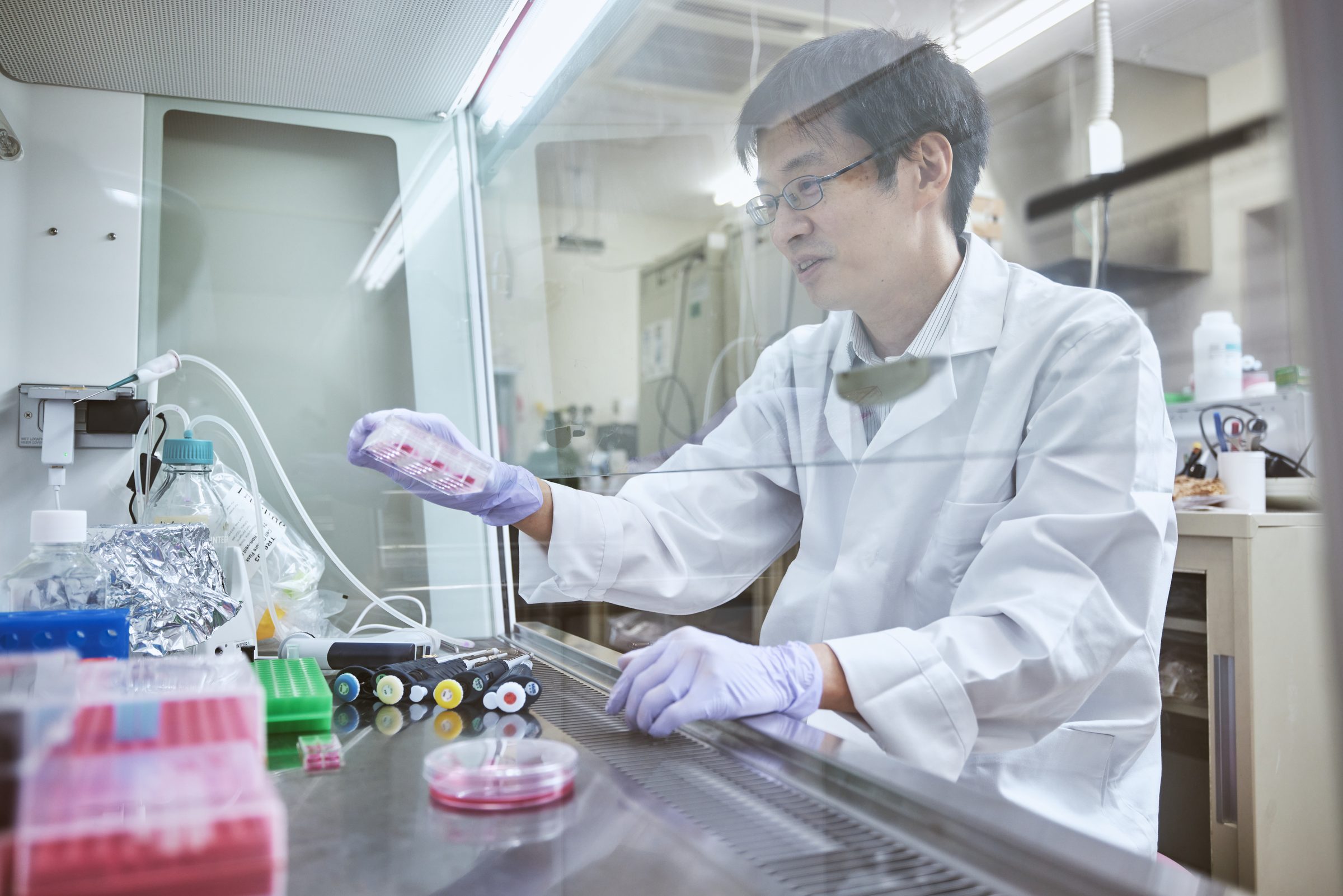
Neurological diseases—such as neurodegenerative diseases like Alzheimer’s disease, Parkinson’s disease, and amyotrophic lateral sclerosis, cerebrovascular disorders such as ischemic stroke and intracerebral hemorrhage, and developmental disorders and mental illnesses—are often difficult to treat or manage. Many of them affect people’s daily lives, and they pose major medical and societal challenges.
Our laboratory aims to:
- Overcome intractable diseases
- Support individuals with disabilities
- Leave a lasting mark on the history of science
1. Humans as diverse descendants of ancient life
We inherit genes from both parents in different combinations. This reshuffling of genetic information has generated diversity over the course of evolution. Diversity helps populations respond to changing environments. Human traits are shaped not only by genes, but also by development, growth, environment and experience. In our laboratory, we value these differences and aim to bring together complementary strengths in our research.
2. Aging and age-related diseases
The cells that make up our bodies are exposed, over time, to DNA damage and the accumulation of material that is no longer needed. Cells repair damage and clear unwanted material, but what happens when that work fails? With age, damaged DNA can leak from the nucleus into the cytoplasm, and that leakage is known to drive a range of age-related phenomena.
How do changes associated with aging lead to disease? We hypothesize that additional self-reinforcing cycles of damage contribute to the development of specific diseases as we age.
We study cellular changes associated with aging, and the mechanisms that lead to specific diseases. The diseases include Parkinson’s disease, Alzheimer’s disease, amyotrophic lateral sclerosis (ALS), multiple system atrophy, heart failure, sarcopenia and liver failure.
3. Development and developmental disorders
Individual differences are an important part of being human. At the same time, a person’s traits and circumstances can make everyday life more difficult. In small fishes we can watch the brain take shape and neurons become active, and ask how differences in genes or environment show up in behaviour. We use these approaches to understand the brain mechanisms underlying neurodevelopmental disorders.
Why these research lines belong together
Neurodegeneration, aging and neurodevelopmental disorders may seem like separate research areas. We approach them through two complementary perspectives: the mechanisms shaped by evolution and the normal functions of cells and molecules. We investigate mechanisms in cultured cells, study them in fish and mice, and compare the findings with analyses of human brain tissue. Following questions across experimental systems helps us understand brain disease and the diversity of brain function.
Questions to take forward.
Neurodegeneration
Question What physiological roles do the molecules implicated in brain disease play inside the cell?
What we want to ask next How do molecules such as APP, APOE and α-synuclein (SNCA) take part in the mechanisms that protect cells? How do changes or failures in those functions lead to disease?
Aging
Question Where does aging end and disease begin?
What we want to ask next Can we stop disease without stopping aging? And why do we age at all?
Neurodevelopmental disorders
Question How do genes and environment shape brain development and behavioural traits?
What we want to ask next How does the brain contribute to social behaviour and sensory processing? How can that understanding be connected to environments and support that fit each person?
Evolution
Question What are the evolutionary origins of brain disease, developmental disorders, or aging?
What we want to ask next Why have molecules that are also involved in disease been passed down for hundreds of millions of years? How have the diversity of brain function and its vulnerabilities to disease and disability arisen through evolution?
Discuss research opportunities
Projects develop through discussion, starting from the lab’s research strengths and your interests and experience. We value researchers who learn from their results, refine the question and help shape the direction of their work.